

How to Prepare Your Hammock for Spring Season

As the chill of winter retreats and the warmth of spring arrives, there's no better way to enjoy the outdoors than lounging in a Caribbean hammock. Whether you're a seasoned hammock enthusiast or a first-timer, getting yours ready for the season takes a little preparation. Here's how.
Step 1: Inspect your hammock
Before you hang it for the season, check it over for wear. Look for frayed cords, weakened fabric, or rusted hardware. Pay particular attention to the clew knots at each end — that's the tightest, hardest-working point on the whole hammock and where stress concentrates. If you spot damage, repair or replace before you put weight on it.
Step 2: Clean and refresh
After months in storage your hammock may have picked up dust, mildew, or a musty smell.
- Fabric hammocks: hand wash with a mild detergent and warm water, or machine wash on a gentle cycle if the manufacturer allows it.
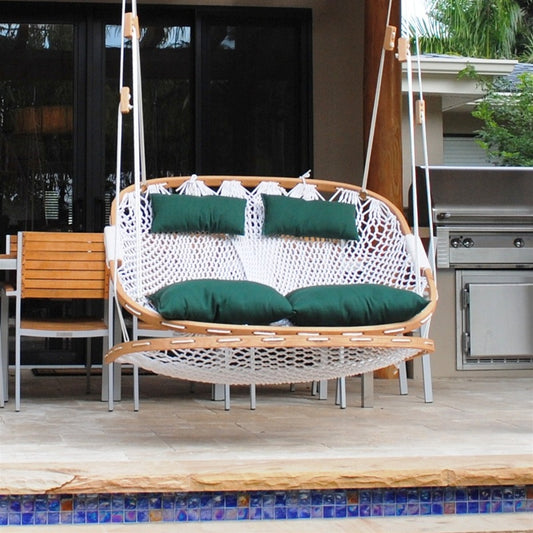
- Caribbean rope hammocks: leave it hanging and work soapy water into the weave with your hands, using a soft brush only on stubborn spots. Never a machine — the bed tangles and the spreader bars won't fit.
- White rope hammocks: spray the ropes with a mold and mildew remover, leave it ten to fifteen minutes, then hose off thoroughly with fresh water.
- Drying: always air dry completely before use, all the way through the clew knots and end cords — that's where water hides.
The full method, including how to avoid the mistake that ruins most hammocks, is in How to Care For, Clean & Store Your Hammock.
Step 3: Choose the spot
- Between two trees: look for sturdy trees roughly 12 to 18 feet apart. Err wider if you have the choice — extra distance you can take up with chain, but there's nothing you can do about trees that are too close. What matters isn't trunk thickness so much as how long the tree has been rooted; a six-inch trunk is plenty after a couple of years in the ground.
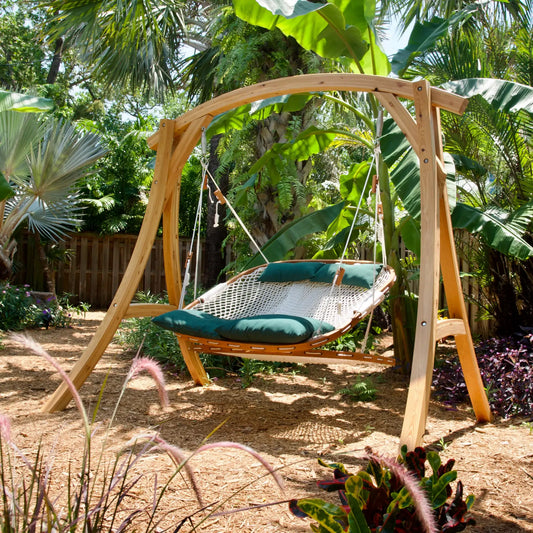
- On a stand: if trees aren't available, a good stand is a stable alternative.
- On a porch or indoors: wall anchors or ceiling mounts can make an inviting indoor spot. Anchor into the joist itself, not the boards.
Step 4: Secure it properly
- Use wide straps. Tree-friendly straps spread the load without cutting into the bark. Skinny ones dig in.
- Check height and sag. Hang it loose with a gentle curve, never tight and flat — a tight hammock sits on a pivot and is far easier to tip out of. Lying in it, you want to be 18 to 24 inches off the ground.
- Test before relaxing. Sit gently and check it holds before you fully recline.
The whole process, with video, is here: How to Hang a Hammock Between Two Trees. If you'd rather not buy straps, a length of rope and an S hook does the same job for a couple of dollars.
Step 5: Accessorize
- A blanket or pillow for added softness.
- Bug netting to keep insects off.
- A shade canopy if the spot gets full afternoon sun.
Step 6: Enjoy it
Once it's up, take the time to actually use it. Read a book, take a nap, or just sit out there for twenty minutes with the phone left inside — which does more than you'd think.
Related reading
- How to Hang a Hammock Between Two Trees
- How to Care For, Clean & Store Your Hammock For Winter
- Twenty Minutes in a Hammock
- Shop Jumbo Caribbean hammocks