
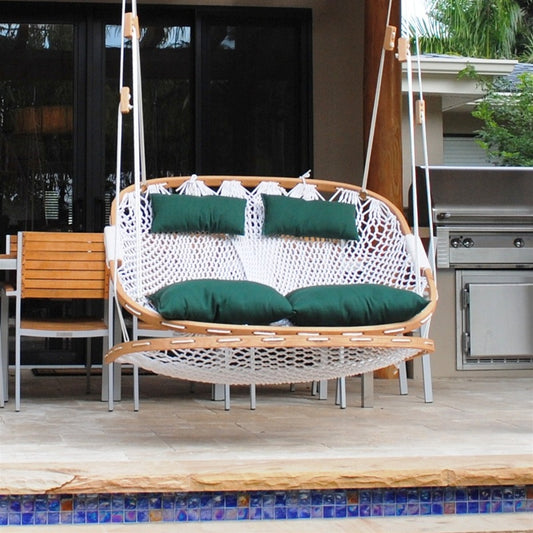
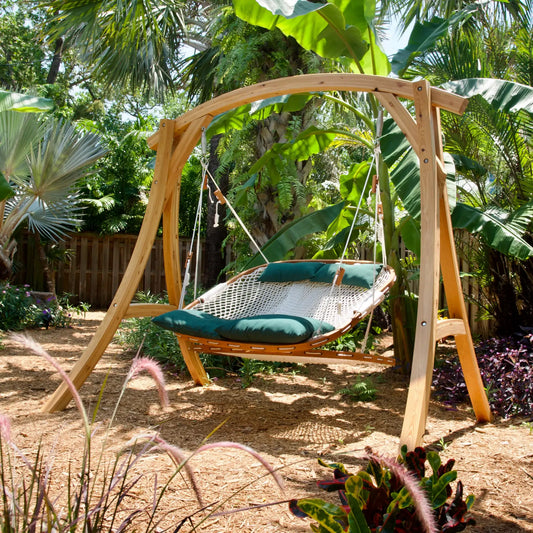

Twenty Minutes in a Hammock

If you are old enough to remember when the evening was yours, you already know something has been taken away.
Work used to stop. There was a point in the day when the job stayed at the job, and nobody could reach you until morning, and what came after it belonged to you — a porch, a yard, a couple of hours of nothing in particular, time with family or friends. Then somewhere along the way we were sold the idea that resting is time wasted and that everybody should be hustling. I saw it from behind the counter for years: people on vacation, standing in my shop choosing a hammock, breaking off to take a work call. The week they had paid so much for never really started.
And it has all gotten faster. Not gradually, and not a lifetime ago — most of it has happened recently enough that you can remember the time before. Fifteen years back, you were not carrying every message, every notification, and every argument in the world in your pocket, and nobody expected you to answer any of them within the hour. Now they do. The days are louder, busier and more crowded than they were; they run at somebody else's speed, and a great many people are getting worn out by it.
Which is what makes a thousand-year-old invention more relevant today than it was twenty-five years ago, when I first opened my shop. The hammock is the same — very few changes in a thousand years, and none at all since I first hung one between two trees — but life has changed, and we find ourselves even more in need of what the hammock has to offer: relaxation and connection.
So leave the phone in the house, go outside and lie down in a hammock. Two things happen out there, and they are both worth experiencing.
Unplug and relax
The first thing you notice is physical. A hammock has no hard surface and no fixed shape — it flexes and moves underneath you, so your weight spreads out instead of landing on your shoulders, neck and spine. Whatever you have been holding on to all day starts to let go within a minute.
Then there is the sway.
Rocking is the first thing that ever settled any of us. Arms, cradles, porch swings — every family that has ever had a baby worked this out when the baby started crying, and it does not stop working when you grow up.
Between the two of them, your mind starts to clear. A week of headlines gets a chance to rinse out. No news, no deadlines, no AI slop and no clickbait rage.
Give it ten minutes and the itch to check your phone fades. Give it twenty and you have usually stopped noticing it is not in your pocket.
Unplug and reconnect

The second thing is what you start to notice once you have relaxed.
You see the breeze before you feel it. It comes through the tops of the trees first and works its way down, so the leaves start moving a second or two before anything reaches your face. Under a tree the sun comes through in patches and travels across you, warming your skin as the branches shift.
Lie quiet and still for a little longer, and the yard forgets you are in it. A bird lands close enough that you hear it, a butterfly goes past at eye level, a bee works the flower bed. All of it happens every afternoon whether anybody is out there or not — the tree falling in the forest with nobody around. The only question is whether you are out there to see it.
Congratulations. You have gone analog. You left the digital world behind on the kitchen counter and came back to the real one for a while, and there is nothing else you need to do. Take a long moment and enjoy it.
There are bonus points available, too. Share the hammock — with a partner, a close friend, one of the grandkids. Tell a family story, share some advice. These days, most of the time we spend with the people we care about goes through a screen: a text, a photo sent on, a reply typed while doing something else. Two of you in a hammock is the opposite of that. The rest of the world disappears, you focus solely on each other, and when you get up you have experienced something real together. In 2005 I shared a hammock with a woman named Sandy. We have been together ever since.
So go and lie down
Twenty minutes is enough. Late afternoon, under a tree, phone in the house — not face down beside you, in the house.
The first few minutes you'll feel like you're wasting time. That feeling is the thing we're conditioned to, and it passes. Then you settle, and when you come back in you find that nothing needed you — the work is where you left it, the messages are where you left them, and none of it moved an inch while you were outside. You're the only thing that changed. You went out wound up, and you came back in twenty minutes later in a better mood, carrying less stress than you took out there with you.
Any hammock will do. I've loved every hammock I've ever been in, from one made out of old onion sacks to a resort hammock on a palm-lined beach, and the one you already own will do this job perfectly well.
Now, if you're inspired and you want to know the best way to hang a hammock for optimum relaxation, I've written that up too — how to hang a hammock between two trees.
Unplug and relax. Then stay out there long enough to reconnect.